Sakai vs Seki: Which Japanese Knife Town Is Which?
Sakai vs Seki knives: Sakai's hand-forged single-edged blades vs Seki's volume, the G. Sakai mix-up, and workshops from $259 in Sakai as of October 2026.
Sakai, just south of Osaka, is the town of hand-forged, single-edged knives for professional Japanese cooking; Seki, in Gifu Prefecture, is the town of volume, making about half of Japan’s kitchen knives; and the G. Sakai Knife Museum, despite its name, is in Seki. Both towns make good knives. They make them differently, and they offer visitors different things to do.
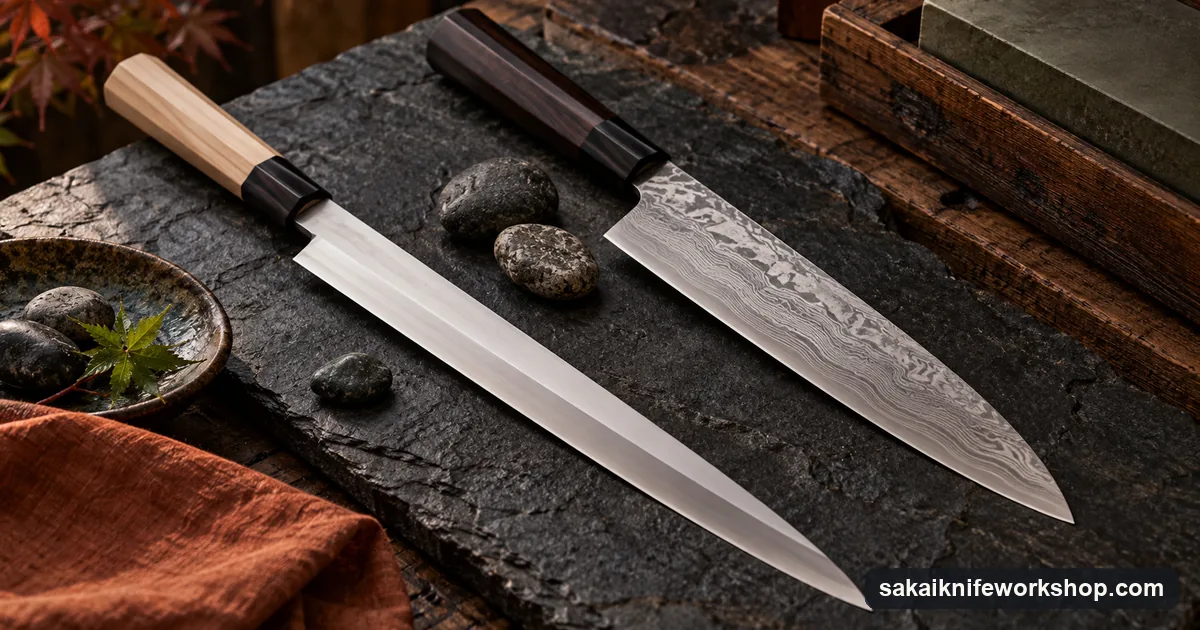
The two towns side by side
| Sakai (Osaka Prefecture) | Seki (Gifu Prefecture) | |
|---|---|---|
| Blade history | Smiths since the 5th-century burial mounds; tobacco knives from the 16th century | Swords from the 13th century to the end of the Edo period |
| Known for today | Forged, single-edged knives for Japanese cuisine | Household kitchen knives, scissors and cutlery in volume |
| The figure people quote | About 90% of professional knives for Japanese cuisine | About 50% of Japan’s kitchen knife production |
| How knives are made | A chain of specialists: smith, sharpener, handle maker | Companies, some of them large, such as Kai, founded there in 1908 |
| Knife museum | Sakai Denshokan (free) and Sakai Knife Museum CUT | G. Sakai’s knife museum; Seki’s swordsmith museum |
| Visitor workshop | Fit a handle and have your name engraved, 2.5 hours, from $259 | Polish, draw on, etch and sharpen a Damascus blade, from $315 |
| From Osaka | About 10 minutes from Namba by Nankai train | A day trip via Nagoya |
Prices, ratings and review counts as of October 2026; operators change prices, so treat them as the shape of the market, not a quote.
Sakai: the professional’s single-edged knife
Sakai’s knife trade runs on a division of labour. A smith forges and hardens the blade, a sharpener grinds the edge, a handle maker fits the handle, and the name is cut by hand. Osaka’s tourism bureau says the city makes about 90% of the professional knives used in Japanese cuisine. The single-edged style, ground on one side with a hollow back, is the Sakai signature; the Sakai tourism bureau dates it to the end of the 17th century. Sakai’s forged blades were designated a national traditional craft in March 1982. How a Sakai knife is made goes through each stage.
Seki: the sword town that turned to kitchen knives
Seki made Japanese swords from the 13th century until the end of the Edo period, and Japan’s national tourism organization traces its Mino sword tradition to the smiths Kaneshige and Kaneuji. When the Meiji government banned samurai from carrying swords, Seki’s artisans moved into knives, scissors and cutlery. The government’s Highlighting Japan magazine puts Seki at about 50% of Japan’s kitchen knife production, counts it among the world’s three great cutlery centres with Solingen and Sheffield, and notes that Kai, founded in Seki in 1908, has the top domestic share of home-use kitchen knives. Some Seki makers pair the sword tradition with modern machinery: Seki Kanetsugu, founded in 1918, describes combining it with CNC grinding machines and lasers in a JETRO exhibitor brochure.
G. Sakai is a Seki company
G. Sakai makes pocket knives and kitchen knives in Seki. Its knife museum at 7-3 Hiraga-cho in Seki holds about 1,500 knives from around 30 countries, according to Seki’s tourism site, with the company’s shop next door. That is where MOST JAPAN holds its Damascus workshop. The group meets at Sekitomioka Station and spends about 2.5 hours in the museum’s workshop with a master craftsman who has worked for over 50 years, polishing a Damascus blade, drawing a design on it, etching and sharpening it; lunch and a visit to the Seki Swordsmith Museum follow. The knife can be a santoku, gyuto, nakiri or bunka, and it is full-size and yours the same day. It is rated 5.0 from 78 reviews, from $315 as of October 2026, for adults 18 and over. If you were looking for a knife museum in Sakai itself, the Sakai knife museum guide has the ones that are there.
What city in Japan is famous for knife making?
Sakai and Seki are the two names most people mean. Osaka’s tourism bureau calls Sakai one of Japan’s three major cutlery-producing regions. The government’s 2016 article lists the main kitchen knife centres today as Sanjo and Tsubame in Niigata, Echizen in Fukui, Kami in Kochi and Seki in Gifu. If you mean the professional chef’s single-edged knife, the answer is Sakai; if you mean sheer output, it is Seki.
Which town for your trip
Handle and Engraving Workshop, Sakai
Your own Sakai knife, name engraved, 10 minutes from Namba.
Check dates →Seki Damascus Workshop
Your own design etched into Damascus steel; 18 and over.
See this workshop →Knife Maker or Blacksmith Tour
A sharpening house or a forge, plus the crafts museum.
See this tour →Choose Sakai if you are in Osaka or Kyoto, want a professional-style Japanese knife, and like the idea of seeing the separate trades. The Nankai Main Line reaches Sakai Station from Namba in about 10 minutes, and the handle and engraving workshop meets there.
Choose Seki if your route runs through Nagoya and you want a design of your own on the blade. Nagoya is the easiest base for a day in Seki; with an early start the workshop fits a route from Kyoto or Osaka via Nagoya, or a stop on the way to Gero, Takayama or Magome-juku.
Neither town has a visitor product where you forge the blade yourself. For that, the Kyoto blacksmith class is the one to look at.
Before you book
Either workshop can be cancelled free up to 24 hours ahead, and either knife flies home in checked luggage only. To buy rather than make, see where to buy knives in Sakai.
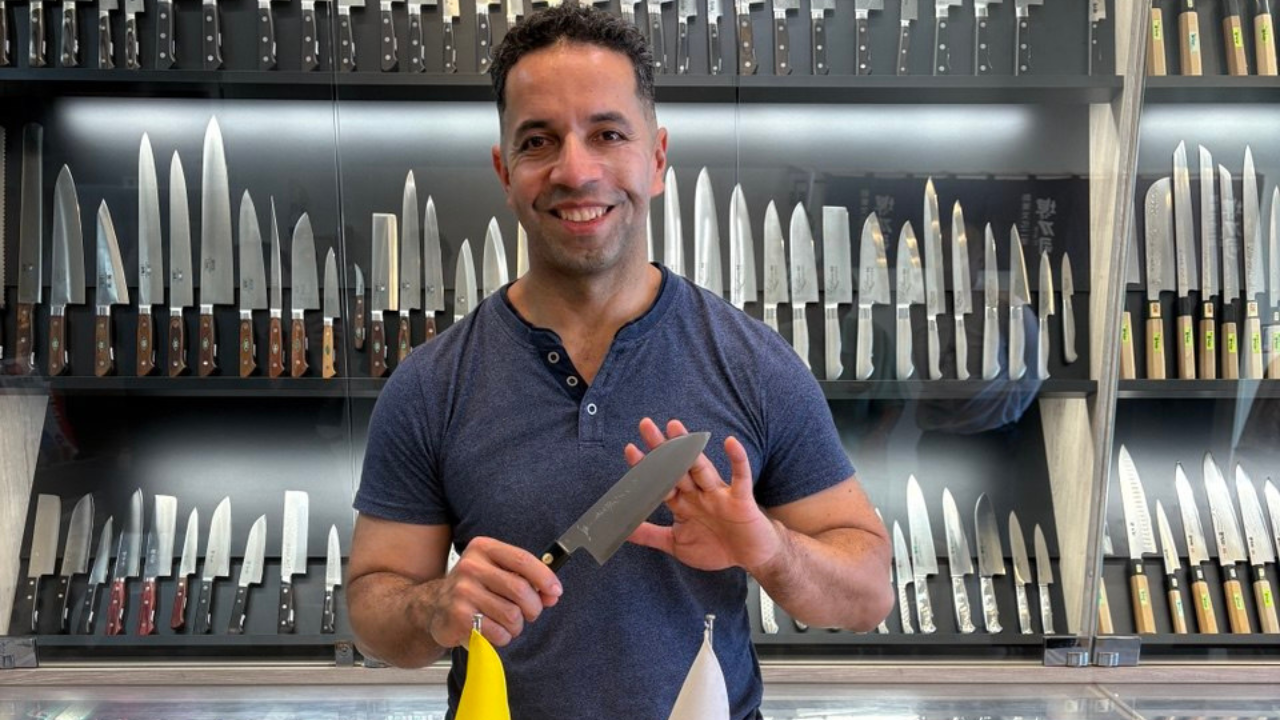
Book the Sakai Knife Workshop
ENA inc.'s private 2.5-hour workshop in Sakai: fit the handle onto your own Sakai knife, watch a master engrave your name on the blade, and take the knife home packed for travel. From $259 as of October 2026.
Check Availability & Book