Where Can You Learn Knife Sharpening in Sakai?
Sakai knife sharpening compared: UGX's 1.5-hour whetstone class from $69 as of October 2026, with no knife to keep, and the knife maker tour's lesson.
To learn whetstone sharpening in Sakai, book UGX’s 1.5-hour Japanese Knife Sharpening Experience, from $69 as of October 2026; the cheaper way in is the sharpening lesson on Japan Tour Adventure’s walking tour on Tuesdays and Thursdays, and neither includes a knife to take home. If leaving with a knife matters more than the skill, the handle and engraving workshop is the better buy.
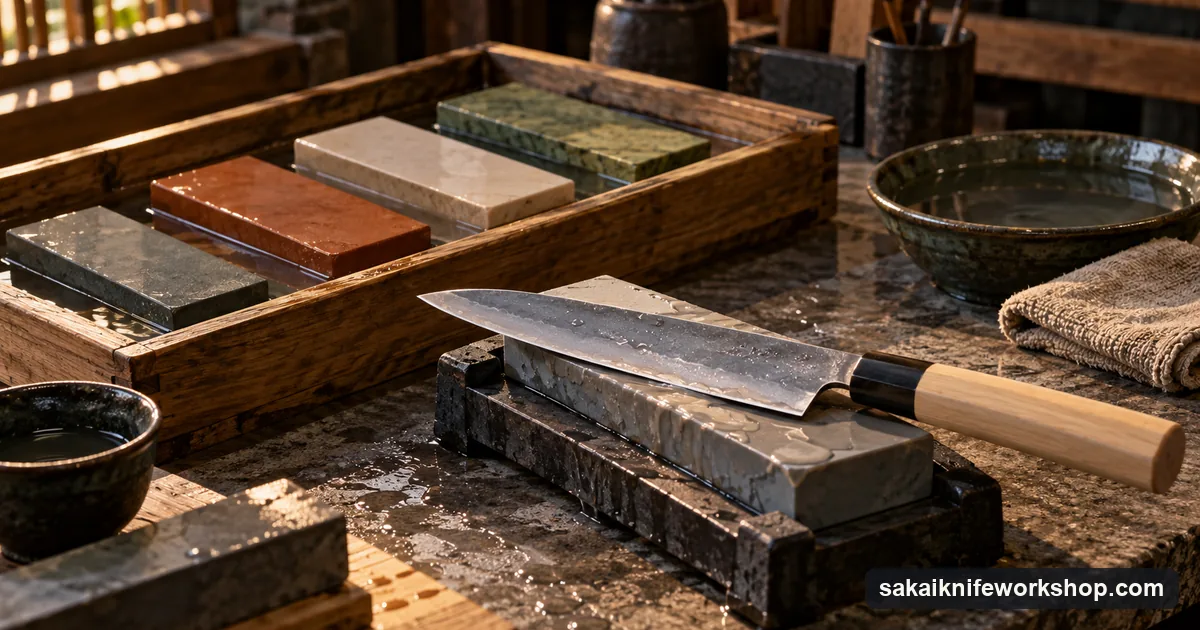
The sharpening options compared
| Option | From | Length | Group | Language | What you sharpen | Knife to keep |
|---|---|---|---|---|---|---|
| Japanese Knife Sharpening Experience (UGX) | $69 | 1.5 hours | Up to 6 | English, Japanese | Practice knives | No |
| Knife Maker or Blacksmith Walking Tour, Tue and Thu (Japan Tour Adventure) | $45 | 3.5 hours | Up to 10 | English; French not guaranteed | A lesson at Yamawaki Hamono’s sharpening station | No; a custom knife can be ordered |
| Craft Your Own Knife: Handle-Making, Name Engraving (ENA inc.) | $259 | 2.5 hours | Private | English host | No sharpening lesson; you fit the handle | Yes, engraved with your name |
Prices, ratings and review counts as of October 2026; operators change prices, so treat them as the shape of the market, not a quote.
UGX’s class
The class is built in three parts. It starts in the shop’s knife museum, with an introduction to the many Japanese knife types for cooking and crafts. Then you go back to the shop and sharpen on whetstones, and you finish by fitting handles. Practice knives, whetstones, work wear and an apron are provided, along with an English interpreter, and the group is capped at six. It is wheelchair accessible and not for children under 10. Arrive more than 30 minutes late and you cannot join.
It has seven reviews, all five stars. One April 2026 guest, the only participant that day, describes the session in detail: a guided tour of the museum in English, a demonstration, then practice on 220-grit and 1000-grit stones with feedback until the knife passed a paper-cutting test, and a choice at the end between refining on a 4000 or 8000 stone or finishing with honing. Another guest liked not having to buy a knife as part of the course.
The knives are practice knives, so you go home with the technique, not a blade. UGX also runs a separate sharpening workshop that includes your own knife; that one is not among the tours on this site.
If you want to learn to sharpen in Sakai, this is the class to book.
The lesson on the knife maker tour
Japan Tour Adventure’s walking tour from Nankai Sakai Station has 97 reviews at 4.8, from $45, marked down from $76. After a sweet shop and the crafts museum, the Tuesday and Thursday route goes behind the scenes at Yamawaki Hamono, a knife maker founded in 1927 where raw blades arrive straight from the blacksmith. You see the sharpening station and the office, watch blades being turned into finished kitchen knives, and learn and practise traditional sharpening with a trained guide. You can also order a custom knife and watch it being made. The Wednesday route visits a blacksmith’s forge instead, so pick a Tuesday or Thursday for the lesson. The tour needs two guests to run, and you should bring a passport or ID card. Every Sakai knife tour compared covers it next to the other walks.
What a Sakai sharpener actually does
In Sakai, sharpening is a trade of its own, done by a different craftsman from the smith. On Osaka Prefecture’s list of the 15 steps of a Sakai forged knife, seven fall between the heat treatment and the handle: a rough grind, grinding the face, straightening the blade with a chisel, grinding the back into its slight hollow, thinning the edge, buffing, and finally putting the edge on with a small whetstone. The hollow back exists because Sakai’s kitchen knives are traditionally single-edged, a style the Sakai tourism bureau dates to the end of the 17th century.
A class teaches you the last of those steps, the edge on a whetstone, because it is the one a knife needs again and again at home. The grinding that shapes a new blade stays with the professionals. Some Sakai shops also sharpen and maintain knives for customers; Osaka’s tourism bureau names Wada, a knife wholesaler founded over 150 years ago, as one. Where to buy knives in Sakai covers the shops.
Pick by what you want from it
Whetstone Sharpening Class
Museum, whetstones and handle fitting in 1.5 hours, up to 6.
Check dates →Knife Maker Tour, Tue and Thu
A sharpening lesson at Yamawaki Hamono, with the crafts museum.
See this tour →Handle and Engraving Workshop
Fit the handle on your own knife and watch your name engraved.
See this workshop →Before you book
You can cancel either free up to 24 hours ahead. For the full chain from forge to handle, read how a Sakai knife is made; for the class page itself, see UGX’s sharpening experience.
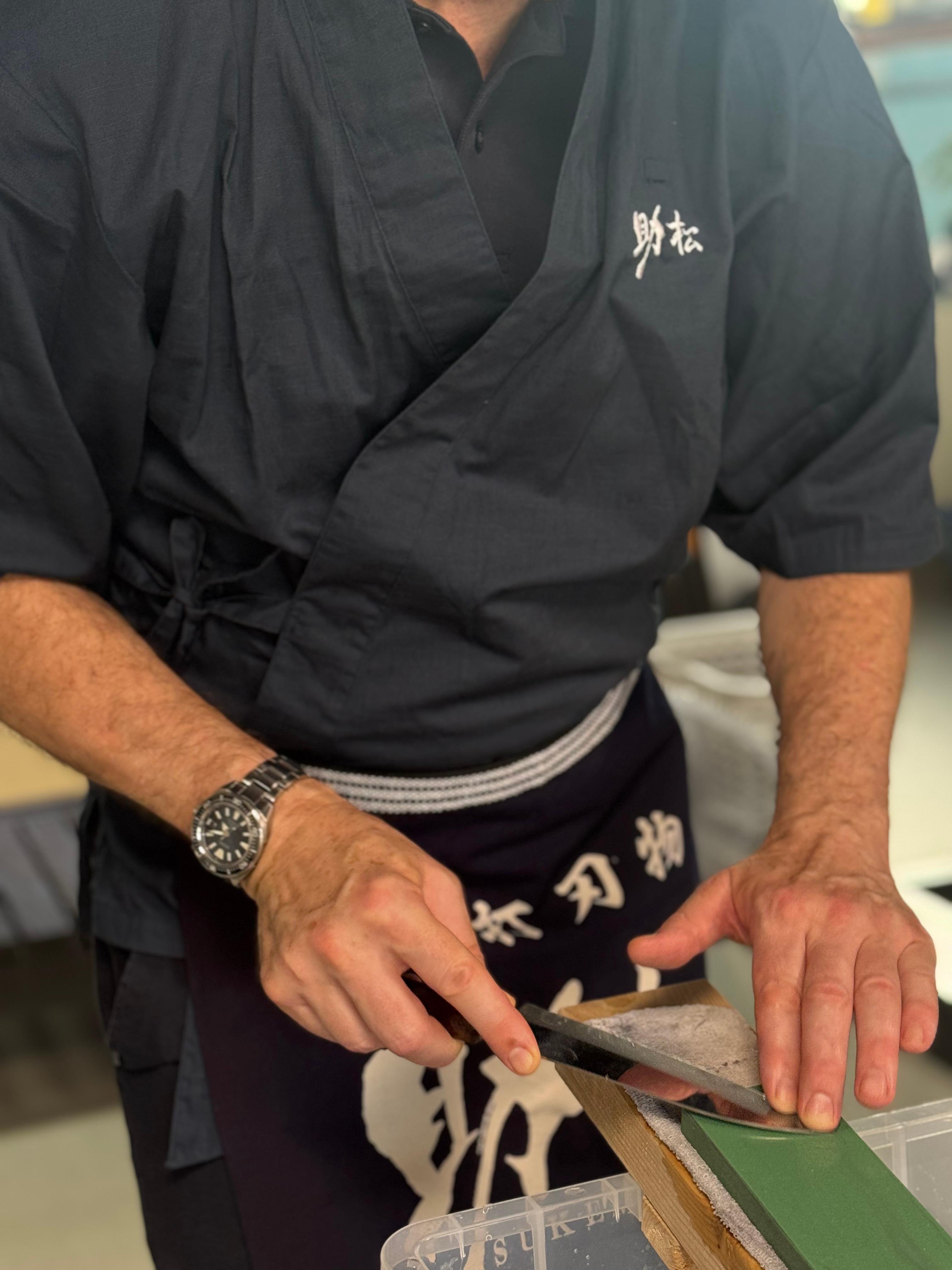
Book the Sakai Sharpening Class
UGX's 1.5-hour class in Sakai: the shop's knife museum, whetstone sharpening on practice knives with an English interpreter, then handle fitting. Up to 6 people, no knife to take home, from $69 as of October 2026.
Check Availability & Book