Which Sakai Knife Museum? The Sakai Traditional Crafts Museum and the Rest
Sakai knife museum untangled: the free Sakai Traditional Crafts Museum, its CUT floor, two workshop museums, G. Sakai in Seki. From $38 as of October 2026.
When people look for the Sakai knife museum, they almost always mean the Sakai Traditional Crafts Museum, called Sakai Denshokan locally: a free hall in the old town whose second floor is the Sakai Knife Museum CUT and whose ground floor is a knife shop stocked by the city’s makers. Two knife companies run small museums of their own, and the G. Sakai Knife Museum is not in Sakai at all. This site is independent and is not affiliated with any of these museums.
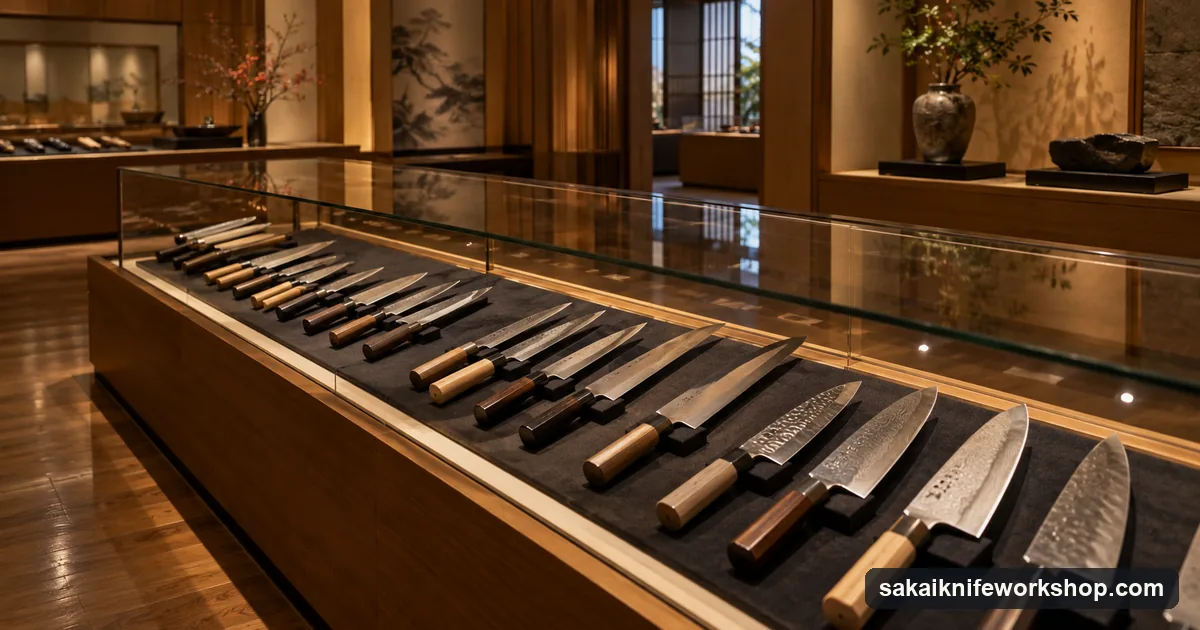
Six museums, untangled
| Name | What it is | Where | Open | Entry |
|---|---|---|---|---|
| Sakai Traditional Crafts Museum (Sakai Denshokan) | Crafts hall: knife shop downstairs, exhibits upstairs | Sakai-ku, 3 min from Myokokuji-mae tram stop | 10:00-17:00; closed third Tuesday, 29 Dec-3 Jan | Free |
| Sakai Knife Museum CUT | The Denshokan’s knife floor, opened in its 2022 renovation | Denshokan, second floor | As above | Free |
| Sakai-Tohji Knife Museum | Museum of the maker Izumi Riki Seisakusho | Sakai-ku, 1 min from Shinmeicho tram stop | Weekdays 9:00-18:00 | Not published |
| UGX’s shop museum | Where UGX’s sharpening class begins | Sakai | With the class | In the class fee |
| Sakai City Museum | City history and the kofun tombs, not knives | Daisen Park, by JR Mozu | 9:30-17:15; closed Mondays | ¥200 |
| G. Sakai Knife Museum | Museum of G. Sakai, a knife company | Seki, Gifu | Weekdays 10:00-16:00 | Free |
Sakai City’s English pages and Nankai also use the name “Sakai Hamono Museum” (hamono means bladed tools); one tour calls the Denshokan the Sakai City Craft Museum, and another lists it and CUT as two stops. It is one building.
Sakai Traditional Crafts Museum: visiting facts
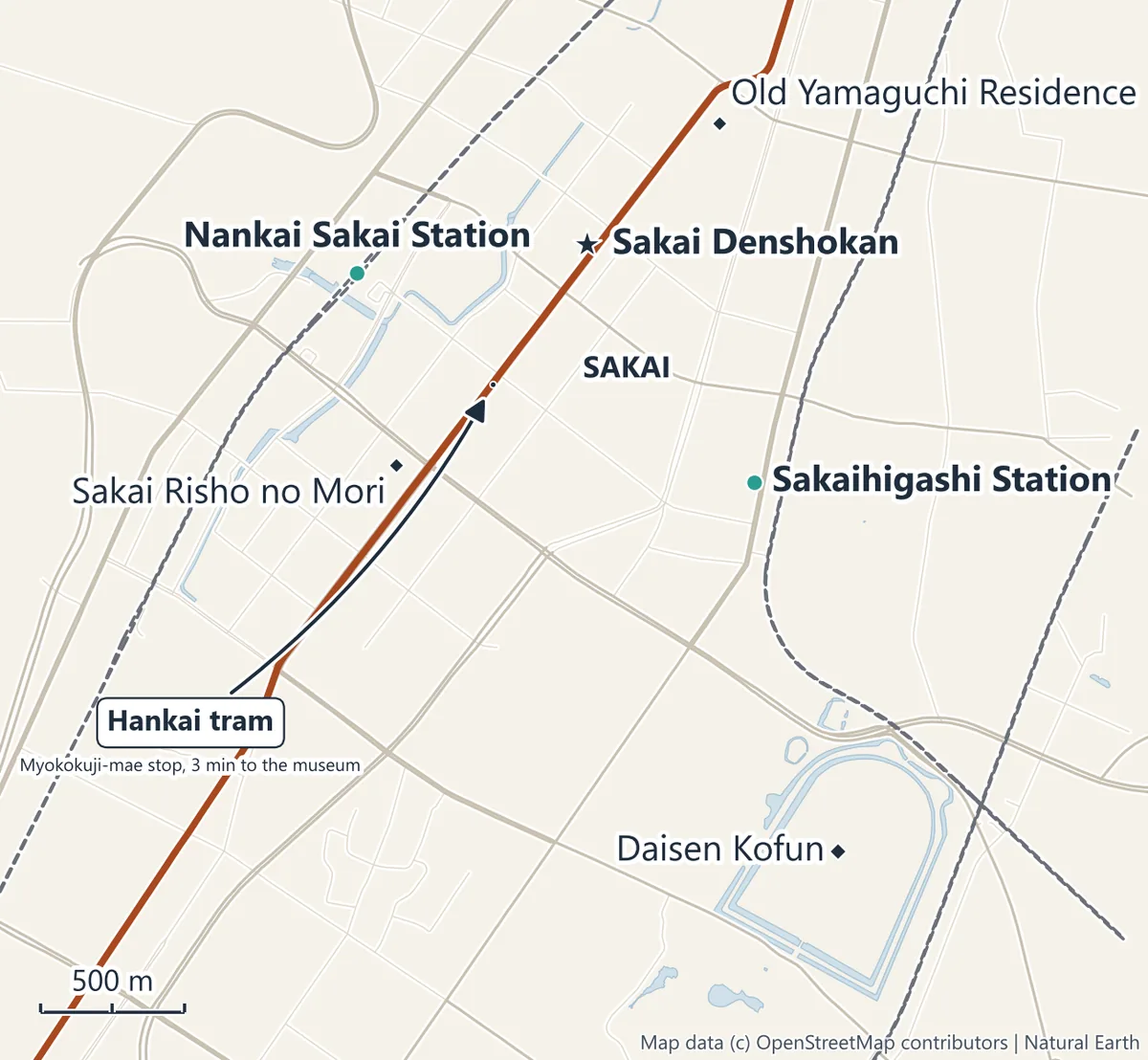
The address is 1-1-30 Zaimokucho-nishi, Sakai-ku, about 3 minutes’ walk from Myokokuji-mae on the Hankai tram and about 15 minutes on foot from Nankai Sakai Station (Nankai’s station page says 13). It opens 10:00 to 17:00 and closes on the third Tuesday of each month (the next day if that Tuesday is a holiday) and from 29 December to 3 January; other closures are posted on sakaidensan.jp. Entry is free and you walk straight in. Only groups of 15 or more book ahead.
English-speaking staff are on site, and Sakai’s tourism bureau lists major cards, UnionPay, QR codes and IC cards at the till.
Floor by floor
- Ground floor, TAKUMI SHOP. One counter for knives and whetstones, another for incense, kelp, dyed cotton, sweets and tea. Sakai’s knife firms take turns staffing the knife counter.
- Second floor, Sakai Knife Museum CUT. The history and making of Sakai knives in real pieces, models and drawings, including a belt hammer in use from about 1950 and a display of knife types. The centrepiece, HIBANA, is a hanging work built from about 300 pieces of knife material. Captions are in English, Chinese and Korean by QR code.
- Second floor, TAKUMI EXHIBITION. Sakai’s other crafts, from dyed cotton to carp streamers.
Demonstrations and sharpening
A free sharpening demonstration runs every Friday from 13:30 to 15:00, and free re-sharpening demonstrations on Saturdays and Sundays, 11:00 to 12:00 and 13:00 to 15:00. Cancellations go on the website.
Re-sharpening costs from ¥1,600 a knife, including knives bought elsewhere, and weekend drop-offs usually come back the same day. Hands-on events, posted in Japanese, fill first come, first served; on 23 November 2026 a certified traditional craftsman leads one where you sharpen, engrave and fit the handle of a knife you keep.
Buying there
The museum’s online shop lists a 120 mm petty knife at ¥5,280 and a 165 mm Sakai Tohji santoku at ¥11,330, tax included, but ships only within Japan, so visitors buy at the counter. Knife sales there passed 100 million yen for the first time in fiscal 2023, Kyodo News reported, helped by foreign visitors. The museum’s pages do not say whether the shop is a registered tax-free shop, so bring your passport and ask. Shops, prices and the November 2026 tax-free rules are in where to buy knives in Sakai.
The workshop museums
Sakai Tohji. Sakai’s tourism bureau lists the Sakai-Tohji Knife Museum of Izumi Riki Seisakusho: how Sakai knives are made, rare knives, matchlock guns, swords, tobacco knives and stone knives, with an English video. It opens on weekdays and takes reservations. ENA’s handle-making and engraving workshop starts in this museum (the tour spells it Sakai Toji) with a short film, before you fit the handle onto your own Sakai blade and watch a master engrave your name on it.
UGX. The sharpening experience opens in a knife museum on the types of Japanese knives, then returns to the shop for whetstones and handle fitting, on practice knives you do not keep.
The G. Sakai Knife Museum is in Seki
G. Sakai is a knife company in Seki City, Gifu Prefecture, not a place in Sakai. Its museum beside the company shop holds about 1,500 knives from around 30 countries, Seki’s tourism site says, including a five-metre knife the company says Guinness recorded as the world’s longest. Entry is free. MOST JAPAN’s Damascus knife workshop runs there, from $315 and rated 5.0 from 78 reviews. How the two towns differ is in Sakai vs Seki knives.
The museum alone, or with a guide?
Alone works well: the Denshokan is free, translated and staffed in English. What it cannot show you is a working shop, and that is where a tour earns its fee. Japan Tour Adventure’s walk gives the museum 30 minutes, then goes into Yamawaki Hamono’s sharpening shop on Tuesdays and Thursdays or a blacksmith’s forge on Wednesdays. HopGo’s day walk spends an hour in the Denshokan and CUT with a guide. Yamaguchi Motors’ three-day trip promises a sharpening demonstration there; the museum’s scheduled ones fall on Fridays and weekends.
Knife Maker or Blacksmith Walk
The crafts museum, then a sharpening shop or a forge.
Check dates →Sakai Artisan and Cultural Walk
The Denshokan and CUT with a guide, plus tea history, about 4 km.
See this tour →Handle-Making and Name Engraving
Sakai Tohji's museum, then fit and engrave your own knife.
See this workshop →Prices, ratings and review counts as of October 2026; operators change prices, so treat them as the shape of the market, not a quote.
Before you go
Mind the third-Tuesday closure; Friday afternoons bring the sharpening demonstration. A knife you buy stays boxed and wrapped on the way to your hotel and flies home in checked luggage. Trains, trams and journey times are in how to get to Sakai from Osaka.
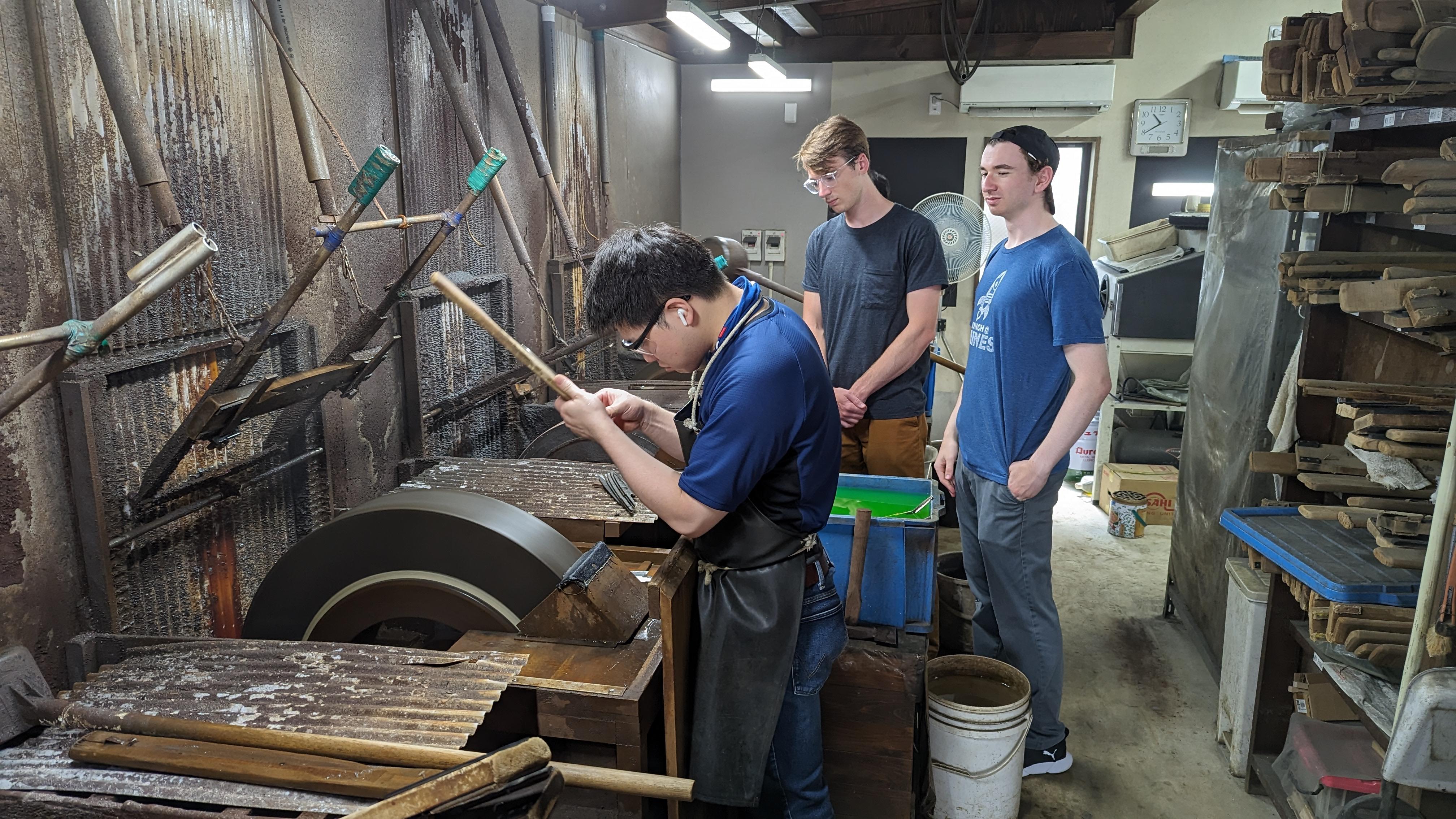
Book the Sakai Knife Maker or Blacksmith Walk
Japan Tour Adventure's 3.5-hour walk from Nankai Sakai Station: an old sweet shop, the crafts museum, then Yamawaki Hamono's sharpening shop on Tuesdays and Thursdays or a blacksmith's forge on Wednesdays. Rated 4.8 from 97 reviews, from $45 as of October 2026.
Check Dates for the Knife Walk